Column: 30 miles from the front line; life grows in destruction as Ukraine continues to fight
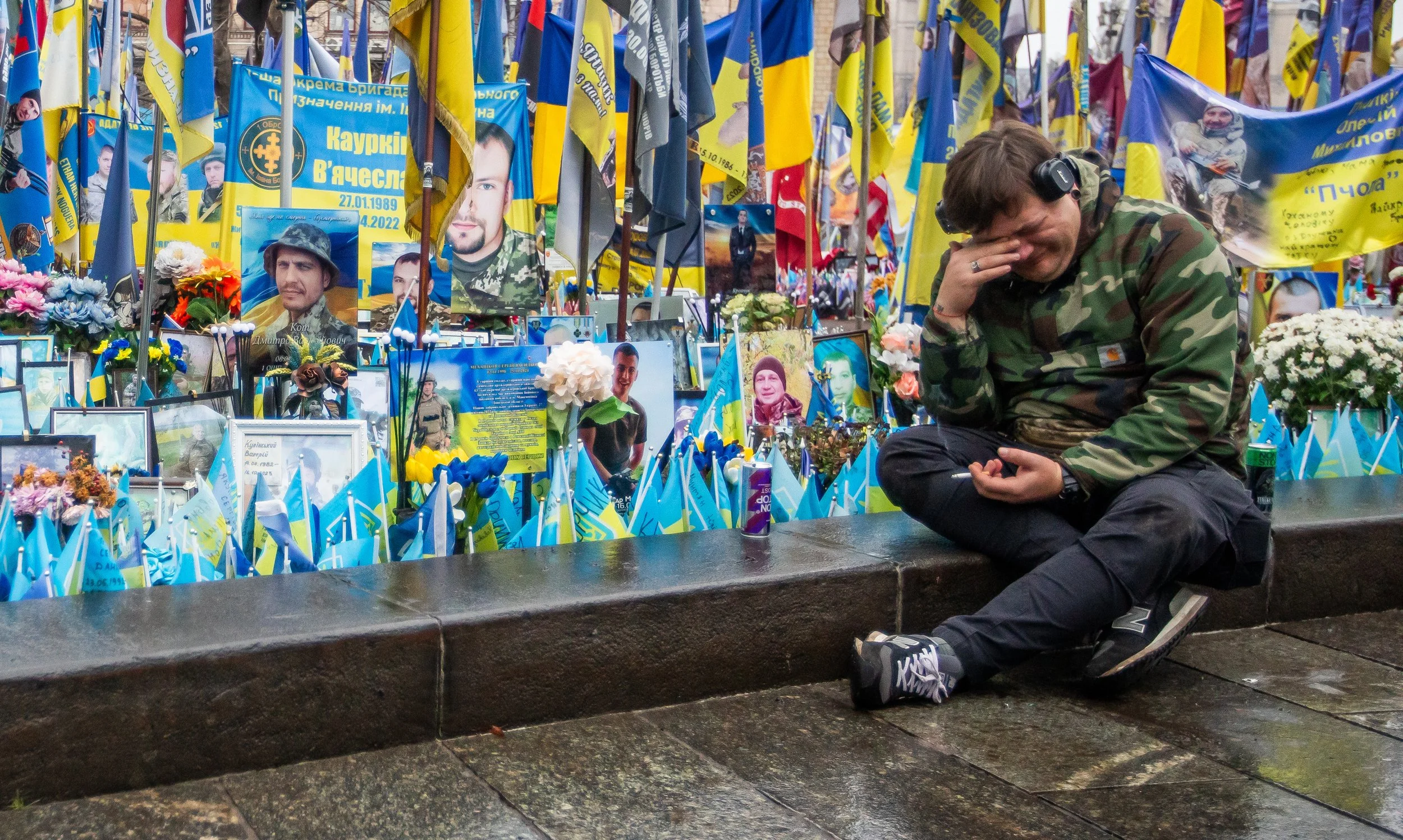
UKRAINE – “Do you have a lighter,” a man in Kyiv asked me, holding two cigarettes pinched in his lips.
I nodded and handed him a small Bic lighter and watched him light both cigarettes at the same time.
“Thank you,” he said.
The man wept on a small ledge in the middle of a memorial for soldiers who died in the Ukraine-Russian war and shared a cigarette with his friend who died.
SONNY TAPIA, Independent Record
A man grieves the loss of his friend in the Ukraine Russian war while sharing a cigarette with him and surrounded by memorials for other soldiers in Kyiv, Ukraine, on Nov. 27, 2025.
This was the new normal three-and-a-half years into the war.
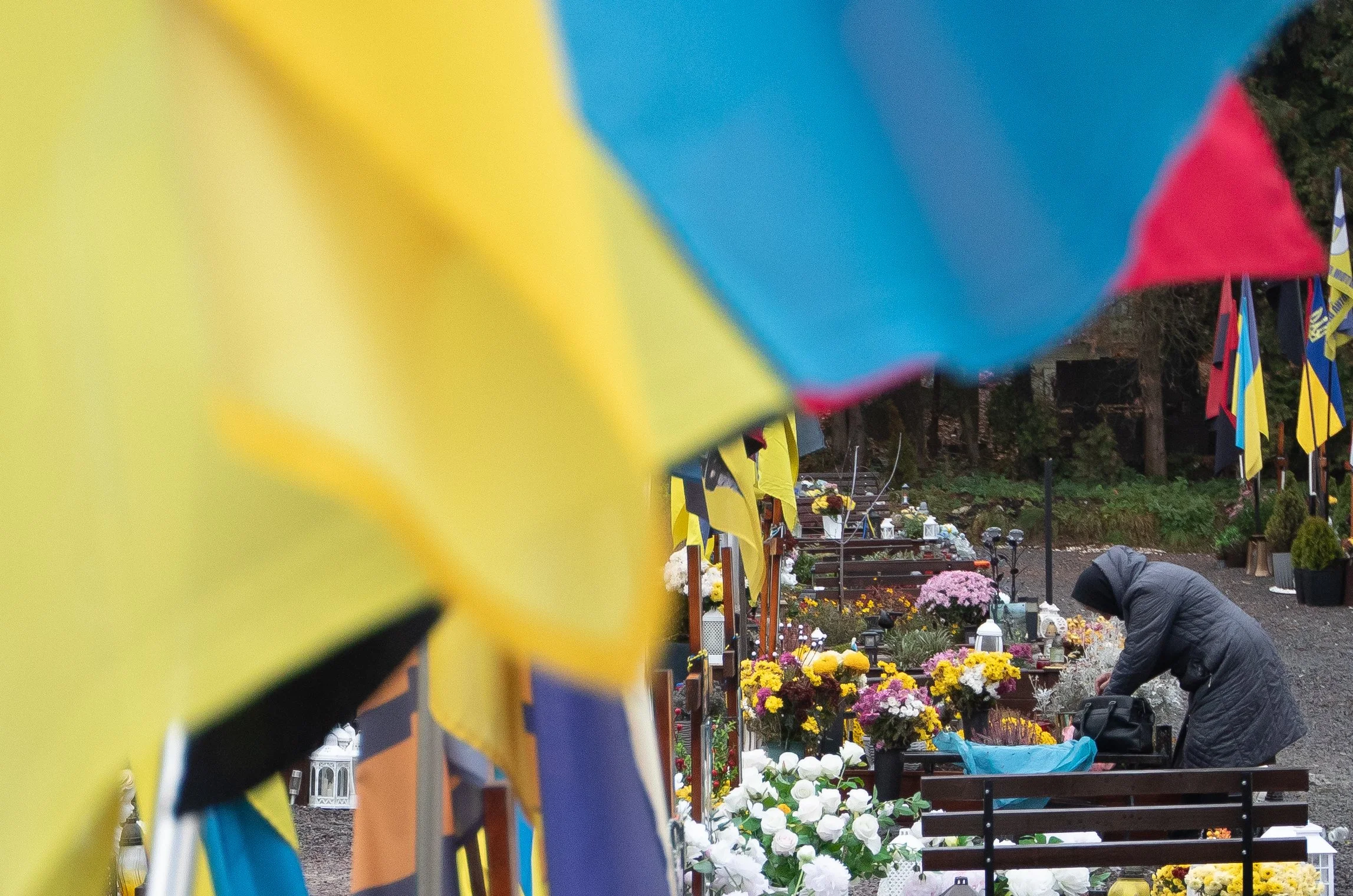
Across the country, these memorials and cemeteries were covered in Ukrainian flags with photos of deceased soldiers.
Despite the signs of death, war, destruction and bombings, people in Ukraine seemed to live their lives as if their eastern border was not being made into a trench.
“We have to,” Bohdan Kovalenko, a Lviv resident said. “I want to live my life how I did before the war started.”
SONNY TAPIA, Independent Record
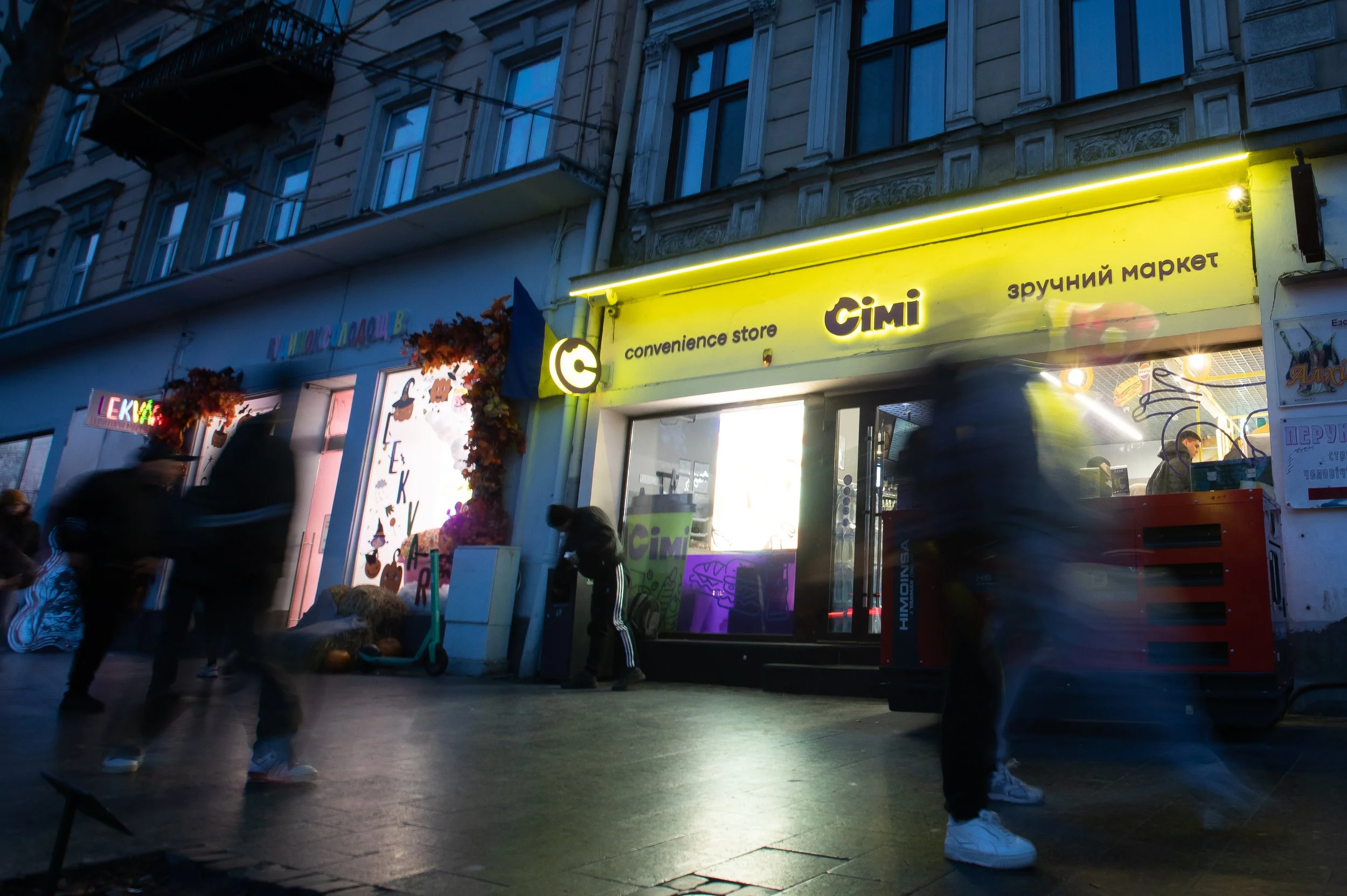
Pedestrians walk past a Cimi convenience store in Lviv, Ukraine Nov. 19, 2025 as a war with Russia wages on the country’s eastern border.
Something that I did not expect going to a war-torn country was seeing parents walk with their kids in parks, drink coffee while reading a newspaper at a cafe, young couples holding hands, children enjoying sweets or teenagers riding electric scooters.
Lviv, the biggest city in western Ukraine, was a prime example of life continuing. From beautifully crafted 16th- and 17th-century architecture to cobblestone roads, bumpy enough to destroy a suspension system, the war seemingly had no impact on the city from an outside point of view.
Oleksandr Shvets, a Lviv resident and my driver, said people had to continue living no matter the circumstance. He then showed me a video he took of a missile cruising over his home and added, “I can tell what kind of missile it is based on the sound.”
SONNY TAPIA, Independent Record
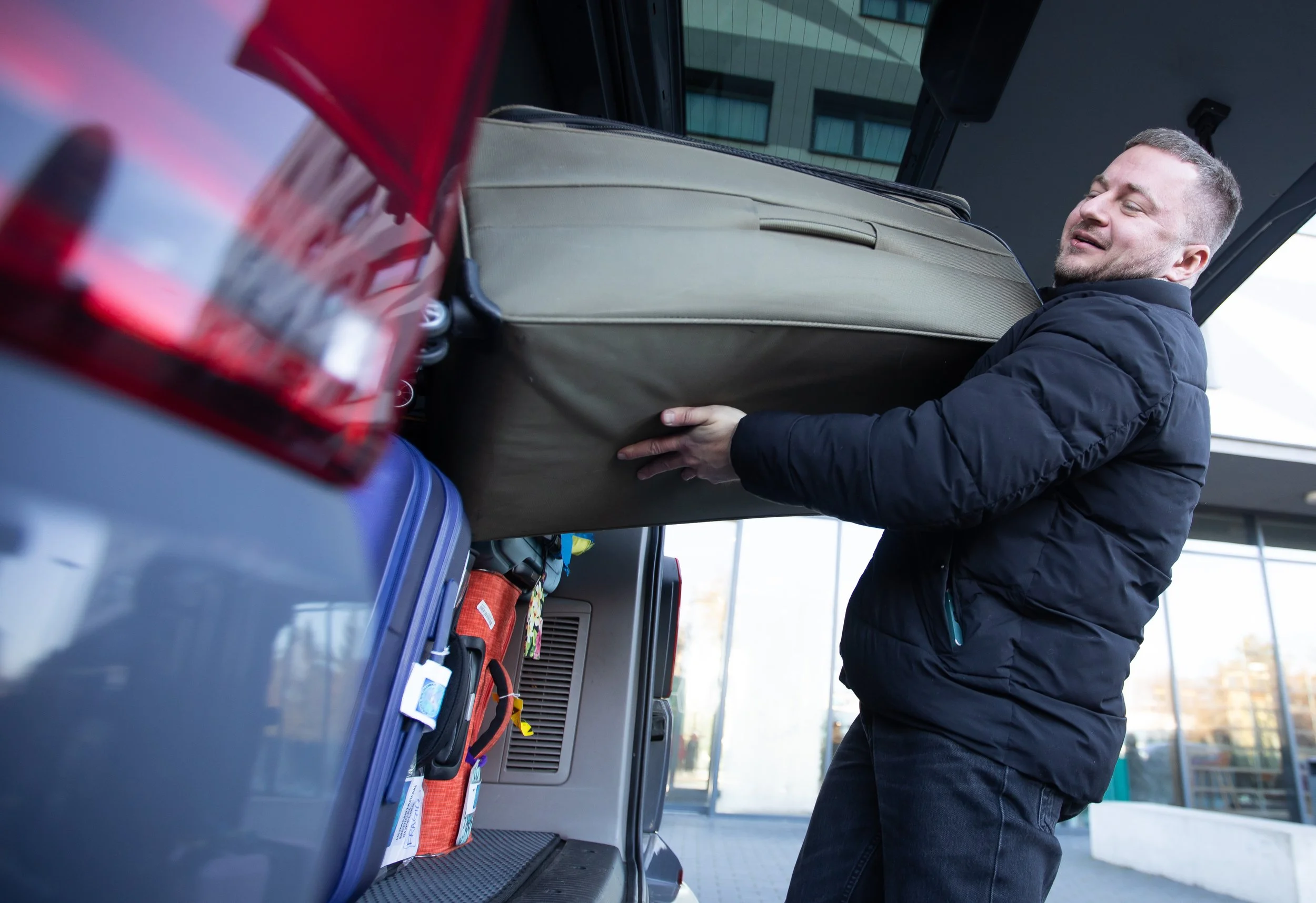
Oleksandr Shvets shoves a suitcase into the back of his van at a hotel in Krakow, Poland before driving Hands On Global Executive Director Valerie Hellermann and organization member Merita Callaway to Lviv, Ukraine Nov. 19, 2025.
I followed Helena-based Hands on Global to Ukraine from Nov. 19-Dec. 3 on its humanitarian mission of delivering medical supplies and offering assistance to various Ukrainian nonprofits with a personal side goal of documenting a side of Ukraine I have not seen living in the U.S., life as it happens.
In Zhytomyr, a city roughly 87 miles west of Kyiv, the nation’s capitol, people operated the same way, going to cafes, walking in parks, going to work and taking public transit.
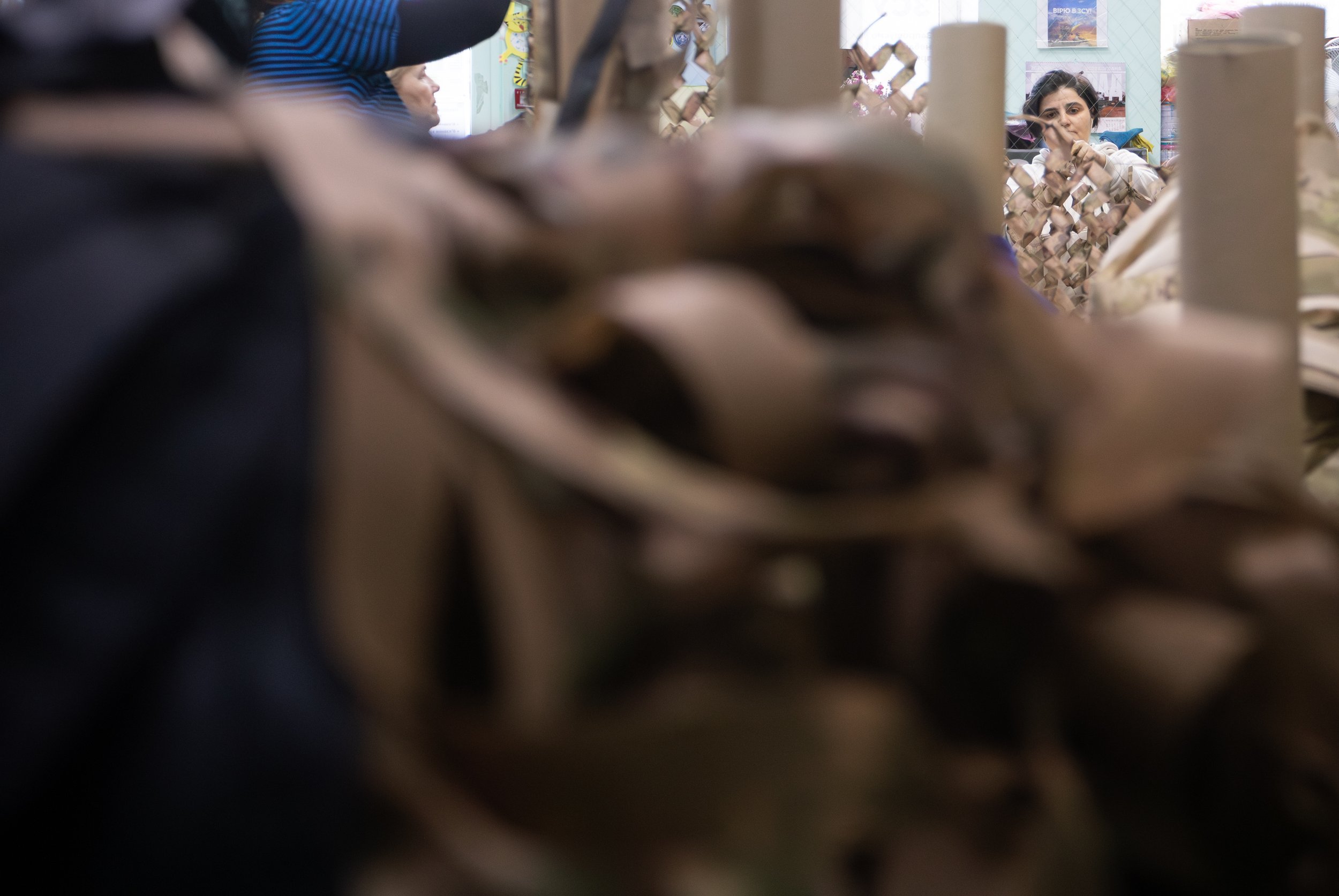
But, with the war waging in the east, people still felt an obligation to make a contribution to the war effort, including elderly women in the “Babushka Battalion,” volunteers weaving camouflage netting and doctors saving lives of soldiers and civilians injured in the war.
SONNY TAPIA, Independent Record
Camouflage netting materials sit in piles in a room in Zhytomyr, Ukraine, on Nov. 25, 2025, as a volunteer makes a net that will be sent to the front lines.
Three soldiers I talked to in the Zhytomyr Regional Clinical Hospital were injured in the war. Two were hit by drones, while the third was shot multiple times.
“Would you go back to the front lines,” I asked.
“Yes,” they said.
In Zhytomyr, I was set to speak with a class of journalism students at the Zhytomyr Polytechnic State University about my profession and my impressions of their country.
About five minutes into the discussion, an air raid siren blared in broad daylight.
Without hesitation or fear, students, faculty and staff made their way outside or to the school’s bomb shelter.
Normalcy.
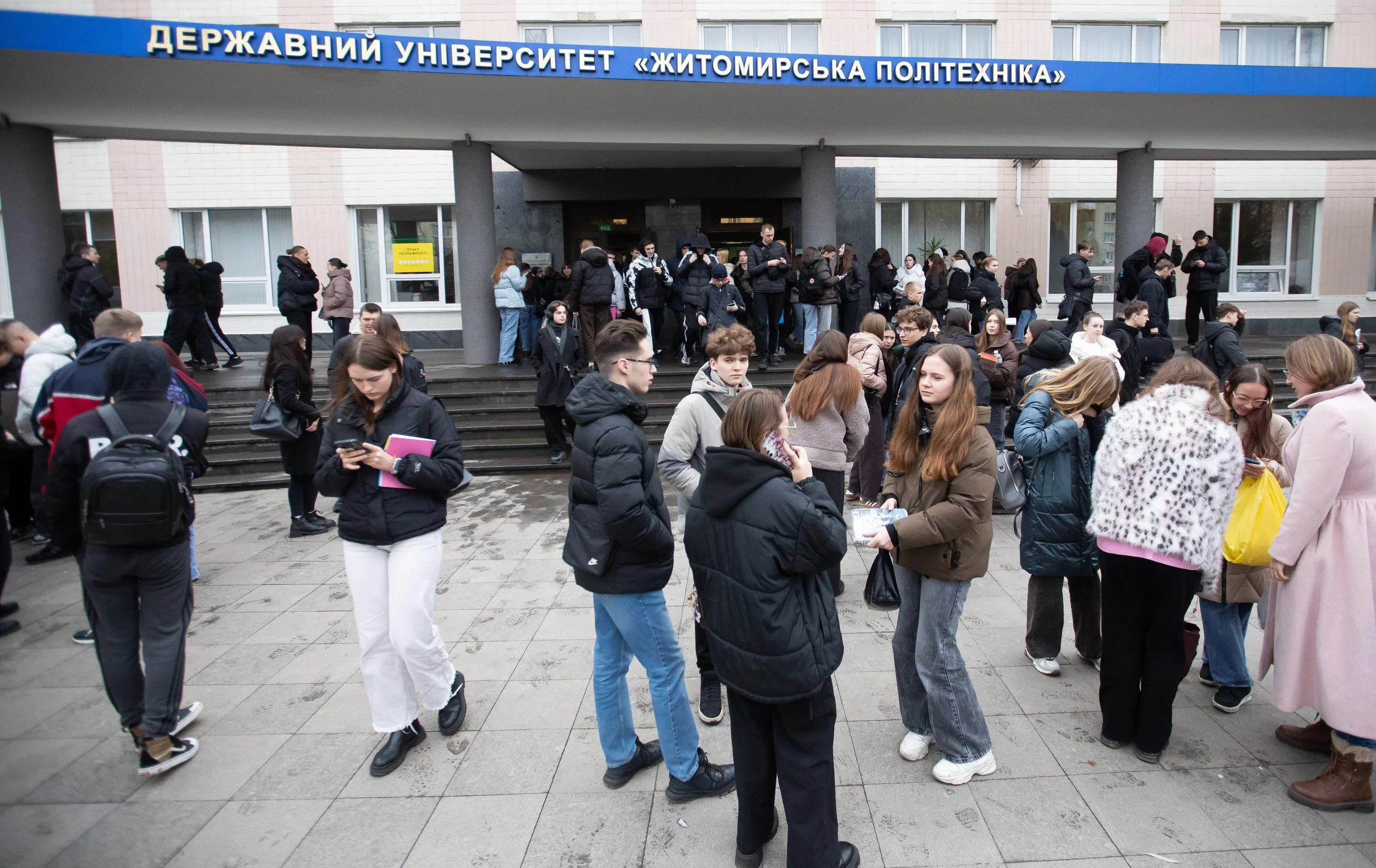
SONNY TAPIA, Independent Record
Zhytomyr Polytechnic State University students stand outside Nov. 24, 2025 as an air raid siren blares around the city.
Students exited the building continuing their conversations, looking at their phones or studying for their next assignment.
Not once on the trip did I feel fear, but I am a journalist who was only there for a short time. The fear aspect never kicked in for me because I was living a proportion of my journalistic dream, while following the lead of other Ukrainians.
I knew I wanted to be a journalist since the seventh grade, but the dream of becoming a war photographer came when I was in college.
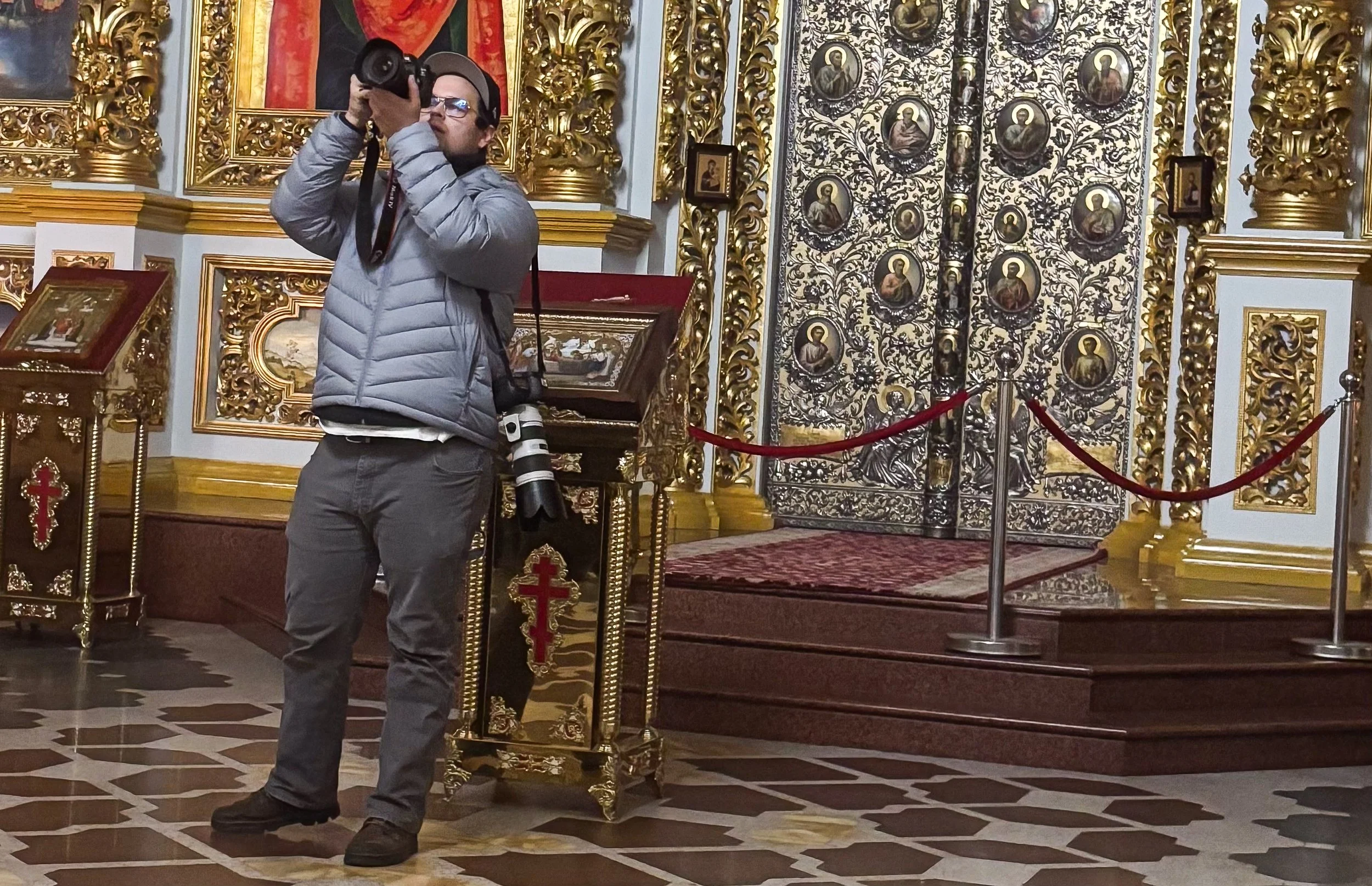
Courtesy, Merita Callaway
Sonny Tapia, photographer for the Helena Independent Record, takes a photo inside a church at the Kyiv Pechersk Lavra Nov. 27, 2025.
In one of my photojournalism courses at California State University-Long Beach, my professor showed us a documentary called, “Hondros.” The film showed the life of war photographer Chris Hondros, who I became heavily invested in following the end of the class.
“This is what I want to do,” I told myself.
I felt the trip was a great first step at 25-years-old, but I was not at my end goal yet.
I was 30 miles from the front line, 30 miles from my dream in Kharkiv, the farthest east we went as a group.
“You see that checkpoint,” Maksym Pozhydaiev asked me in the car heading back to Kyiv. “If you take that road you’ll hit the front line.”
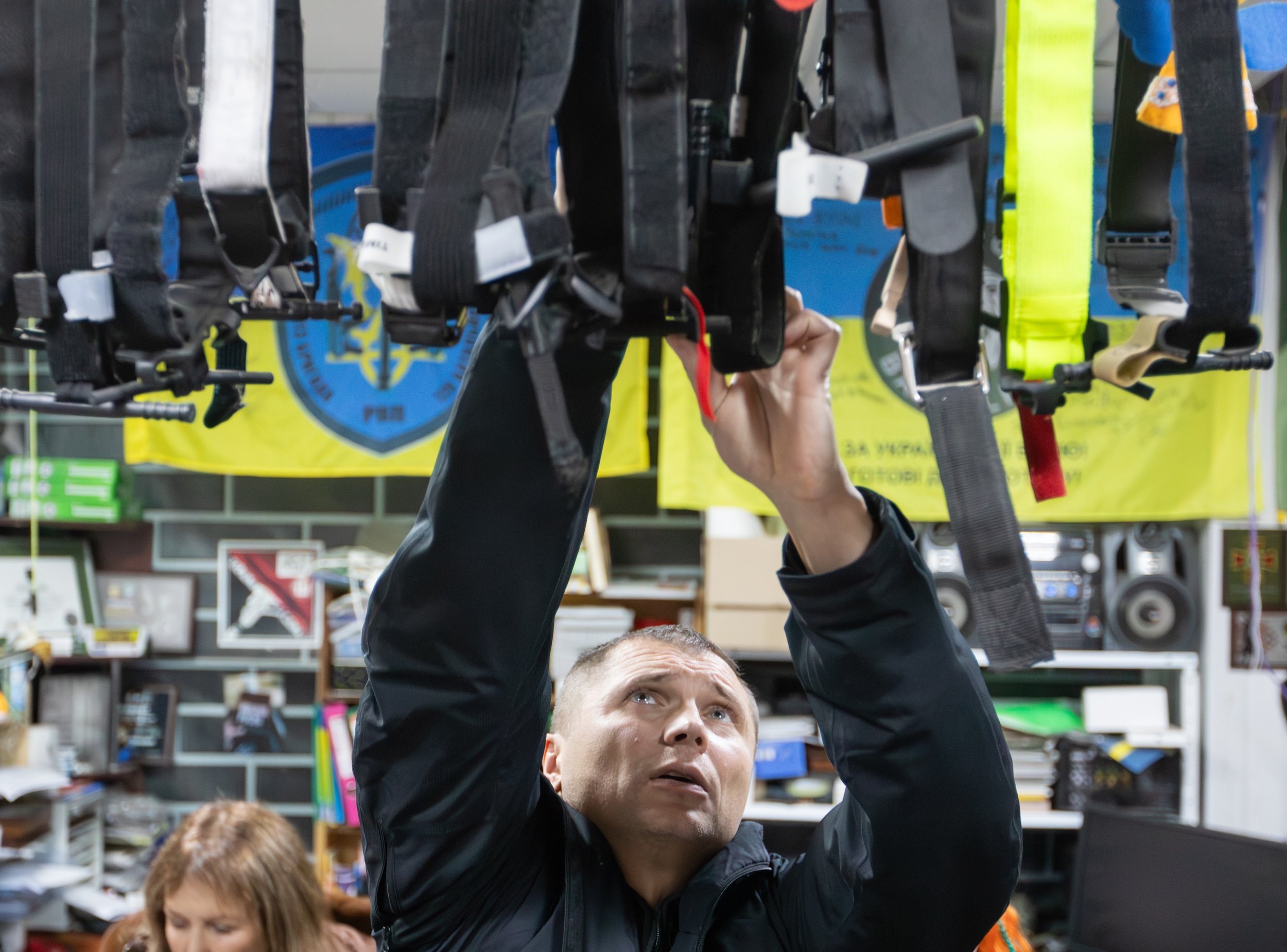
SONNY TAPIA, Independent Record
Maksym Pozhydaiev, project manager, reaches for tourniquets hanging on a wire that are deemed bad quality Nov. 28, 2025, inside a military storage unit in Kharkiv, Ukraine.
My heart stuttered, my mind raced and the feeling of pure journalistic interest flooded my body, only for him to make a left turn.
I watched my dream fade in the rearview mirror, but staying optimistic, I told myself, “One day I can document history with empathy, the way my journalistic heroes did.”
We stayed in Kharkiv one night during the trip and visited with multiple groups who aided the war effort and civilians in speakeasy-type spaces that you would not know existed.
The goal was to keep Russian spies unaware of the whereabouts of various military aid.
At night, before bed, I was editing photos in my Kharkiv hotel room when the lights flickered and the internet disconnected. My first thought was the hotel was switching generators, since the country is on a rotating power grid, but I was wrong.
First came the flickers, then came the bang and the vibration.
It was a glide bomb that hit an industrial plant near the hotel within a couple mile radius.
Kharkiv remained relatively quiet after that, but on the way back to Kyiv I received a news update that Kyiv had been hit the hardest it had been hit in months.
Kharkiv typically gets hit about eight to 10 times per night.
Kyiv had art peppered throughout the city including the Founders and Independence monuments and the Kyiv Pechersk Lavra.

SONNY TAPIA, Independent Record
Gold-lined walls of the Uspens’kyy Sobor, or Dormition Cathedral, rise to the top of its ceiling Nov. 27, 2025, in the Kyiv Pechersk Lavra.
The Kyiv Pechersk Lavra is one of three lavras in the country. Lavra was a title given to highly important Eastern Orthodox Christian monasteries or religious complexes.
Gold rooftops, golden spires and murals of saints were scattered around the multi-building complex that was first built in 1051.
Among the buildings was a bell tower that was equivalent to a 15-story building.
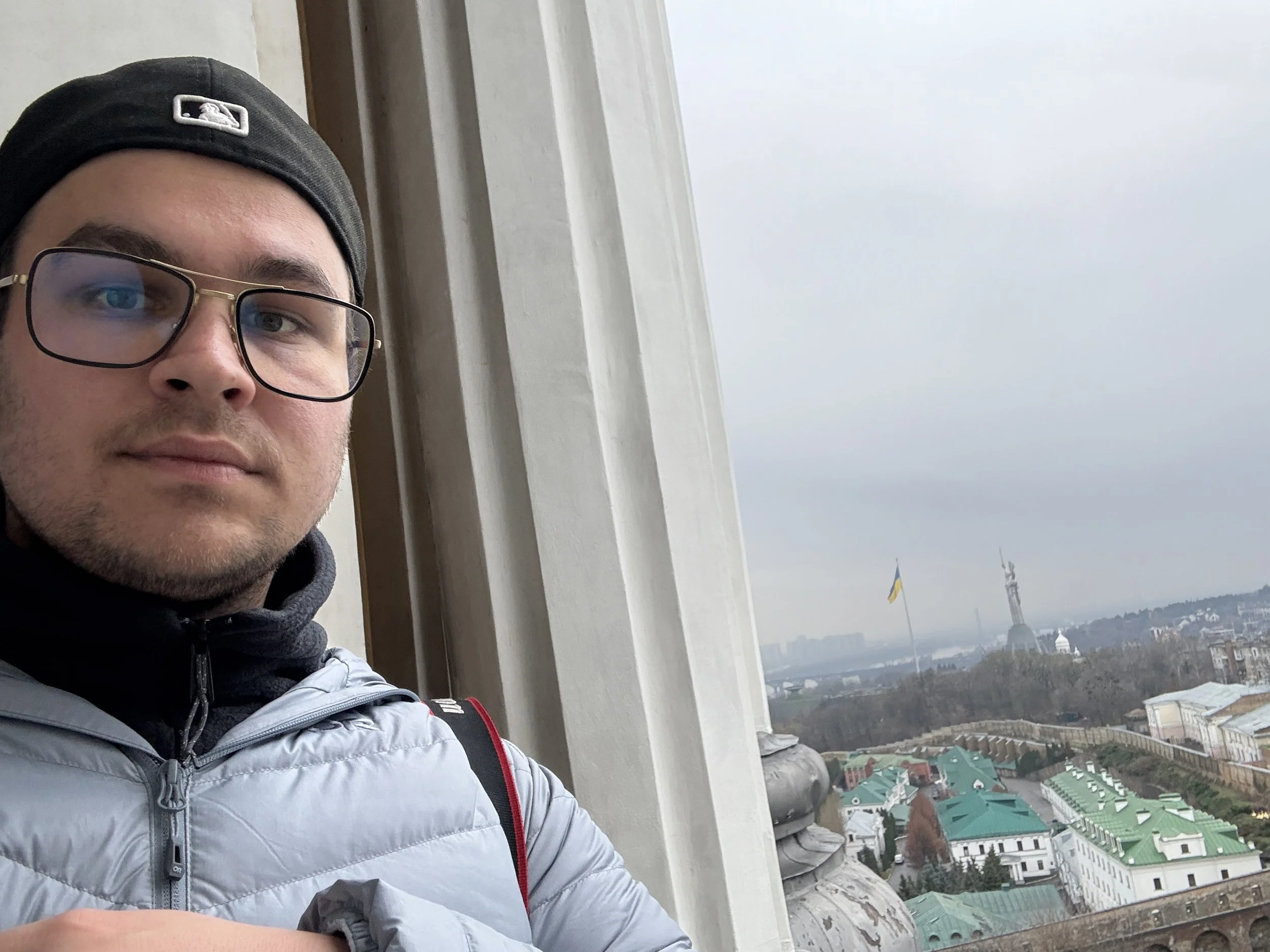
SONNY TAPIA, Independent Record
Sonny Tapia, photographer for the Helena Independent Record, poses for a photo atop a bell tower at the Kyiv Pechersk Lavra Nov. 27, 2025 with the "Mother" Monument in the background.
Reaching the top, out of breath and wishing I’d worked out a little more, I saw a birds-eye view overlooking Kyiv and the Dnipro River.
People took selfies, spoke to each other and called relatives underneath the tarnished non-swinging bells.
As the days continued and we started packing for the trip home, we passed more memorials for soldiers and civilians who died in the war, damaged buildings and burn scarred roofs, but also life.
We arrived in Lviv once more, where I said my final goodbyes to the country I’d seen on the news and in headlines from my apartment in the U.S.
SONNY TAPIA, Independent Record
A woman grieves over the grave of a soldier Nov. 20, 2025 in Lviv, Ukraine as flags wave in the wind.
I felt I learned more about the culture of the Ukrainian people throughout my short trip along with the feelings they had toward the U.S. and its peace talks to end the war with Russia.
People thrived under their new normal despite losing friends, family and others to the war effort all with the nationalism mentality.
On my flight back to the U.S., the images stayed with me more clearly than any headline ever could — a man sharing a cigarette with the dead, students calmly filing into a bomb shelter, gold domes shining over a city that refuses to stop living.
SONNY TAPIA, Independent Record
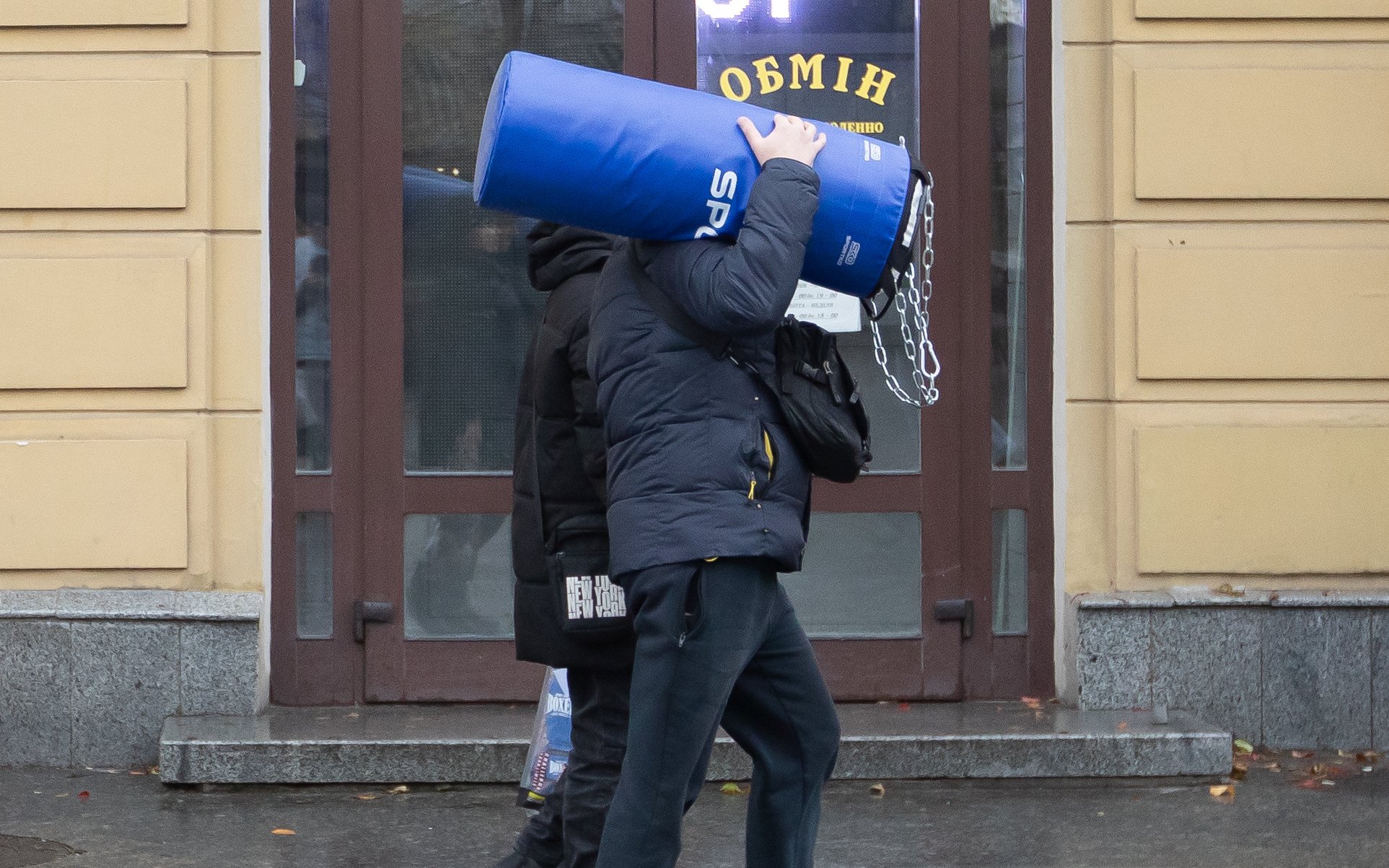
A man carries a punching bag through the streets of Zhytomyr, Ukraine, on Nov. 22, 2025.
Ukraine was not the country frozen in destruction I had imagined from afar. It was a place where grief and routine coexist, where war is constant but life is louder.
I left Ukraine without reaching the front line and without the photographs I once thought would define my dream. Instead, I returned with something more important: an understanding that documenting war is not only about explosions or proximity to danger, but about bearing witness to humanity in its most fragile and resilient form. The story is not just in the trenches — it’s in cafes, classrooms, hospitals and memorials where people wake up every day and choose to keep going.
Thirty miles from the front, I learned that history is not always loud. Sometimes it’s quiet, ordinary and painfully human.
And one day, I hope to tell that story again — closer, clearer and with the empathy Ukraine taught me to carry.
